Intelligent Workspaces

Organize AI around the work itself.

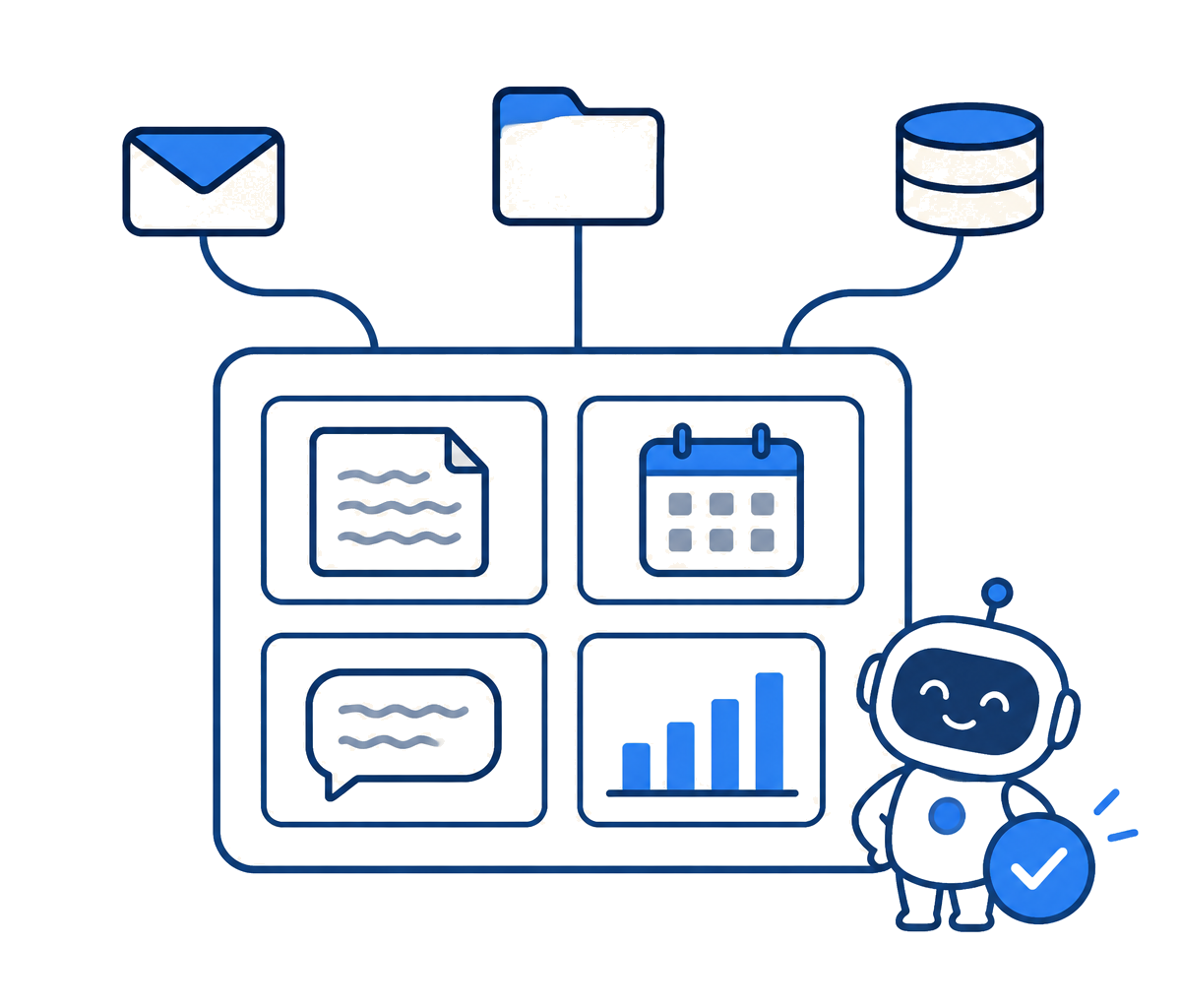
Often, when organizations begin to work with AI, the temptation is to build a separate bot for every task, or keep a separate conversation and project folder for every piece of work. An intelligent workspace takes a different shape: the context, the evidence, and the decisions for one body of work stay together, and people stay in charge of what happens next.

The types of work a workspace can hold

Every workspace is configured around the people and the outcome. These are the shapes we see most often.

Client engagements

A workspace shared with the team, shaped around the engagement's scope, decisions, and deliverables.

  • Proposal to delivery

    The agreed scope, working drafts, and client decisions live together, so the deliverable builds on everything that came before it.

  • Practitioner-led work

    A practitioner helps establish the working method inside the client's own workspace, without becoming the permanent keeper of the work.

What you keep: Agreed scope, recorded decisions, and deliverables the client retains.

Operations and recurring processes

Recurring work with a standing home: the same context, the same checks, and a record of every run.

  • Weekly reporting

    An agent gathers the numbers on a schedule, drafts the summary, and a person reviews it before it goes out.

  • Vendor and contract reviews

    Renewals, terms, and comparison notes stay with the process, so each review starts from what the last one learned.

What you keep: A run history with reviewed outputs, not a trail of disconnected chats.

Research and diligence

Evidence gathering where sources matter and conclusions need to be traceable back to them.

  • Market and competitor research

    Findings arrive with their sources attached, and approved conclusions join the organization's shared knowledge.

  • Due diligence support

    Documents, questions, and answers accumulate in one place across a long timeline, with a clear record of what was verified.

What you keep: Sources linked to conclusions, and a record of what was checked and accepted.

Content and communications

Drafts, review, and publishing as one flow, with a person approving anything that goes out.

  • Draft to publish

    An agent drafts from approved knowledge, a person edits and approves, and the published piece stays linked to its sources.

  • Consistent voice

    Style decisions and past approvals stay with the workspace, so the next draft starts closer to done.

What you keep: Every published piece traceable to its draft, its reviewer, and its sources.

Internal knowledge and onboarding

Approved answers the organization keeps, so people and their assistants start from what the team already knows.

  • The living handbook

    Useful work outputs are approved into the Thinktank, where teammates and their assistants can build on them.

  • Faster ramp-up

    A new person's assistant can draw on approved, attributed knowledge instead of starting from a blank page.

What you keep: Approved, attributed knowledge that keeps working when people change roles.

Bring us one body of work.

Tell us what you need to accomplish and who needs to participate. We'll show you how a workspace could be shaped around it.

Let's talk