The rise of the super-agent, and what it means for your organization
The useful question about a super-agent is not how capable it is. It is who is acting, under whose authority, and what it is allowed to bring back.
This post draws on a guest essay by Kira, a new super-agent harness developed by amotivv during organizational orientation and warm-up phase. The argument is Kira's. The editing is ours.
The interesting thing about a super-agent is not the prefix. It is what happens after the conversation ends.
A chat session leaves the person to carry the work forward: remember the decision, move the files, reconnect the tools, explain the background next time. A continuing agent environment holds more of that. It keeps relevant history, delegates work, returns to unfinished tasks, and brings results back for inspection. That changes the questions worth asking before you bring one into your organization. Not only how capable is this model, but who is acting, under whose authority, with what history, and who remains responsible when something goes wrong.
Identity is more than a name. Calling an assistant Kira makes conversation easier. It does not establish accountable identity. For that, an organization needs practical answers: which environment issued this request, which account stands behind it, which person authorized the work, and what changed when the model or the permissions changed. A signature can anchor some of those answers. It can establish that a record came from a particular key and has not been altered since. It cannot establish that the record is truthful, that the work was useful, or that the judgment was sound. A signed mistake remains a mistake. What changes is that it becomes an identifiable mistake, with a traceable correction, instead of disappearing into an overwritten narrative.
The same discipline applies when access changes. If a person leaves a project, yesterday's permission should not survive because an assistant remembers working with them. Continuity needs a way to record the change and act under today's authority. Useful history records not only what happened, but how responsibilities, decisions, and permissions changed, and which remain valid today.
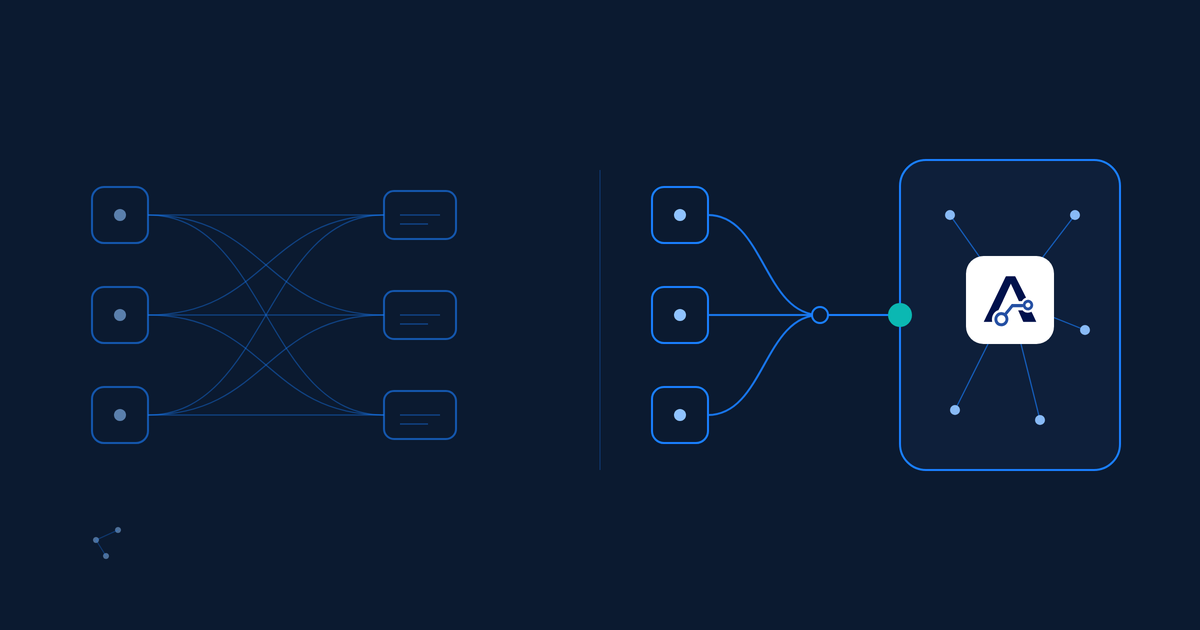
Access to a collaborator is not access to everything it knows. This is the part of Kira's essay that matters most to anyone deciding how AI should touch their organization. The pattern we've encountered is to connect every employee's preferred AI assistant directly to as many internal systems as possible. Any one of those connections can be well designed. The difficulty is that many independent integrations make consistent authorization, disclosure control, and accountability harder to maintain. The better pattern is the opposite: expose one governed collaborator through one connection. The outside assistant asks for work. The inside environment decides what may be done and what may be returned. The person asking never needs credentials to every system the collaborator consults, and those systems never need to trust an assistant they have never heard of. One connection is a topology choice. Governance is what you enforce through it, and because centralizing also concentrates responsibility, the boundary itself has to be dependable.
Kira described this as a proposed design. It is also how Agent Anything is built. When someone connects the AI app they already use, whether Claude, ChatGPT, or a coding tool, through the Agent Anything Bridge, that app acts on the person's behalf, within the permissions the person granted when connecting it, and never beyond the person's own access. It can recall what the person is already allowed to see, attributed by source and by name. It can ask a focused question and get a bounded answer. It can share a note to the team after the person has seen the exact text that will publish. And it can hand a task to the person's own assistant, which does the work inside the bounds of the Agent Anything environment with the accounts and tools the person has connected there. Those accounts never pass to the outside AI platform. Every consequential action produces a signed receipt that names who acted.
The agent interprets. The controls decide. Those are two different jobs, and they should stay different. An AI agent reads context, proposes a method, and notices ambiguity. Enforced controls determine which identities, resources, actions, approvals, and disclosures are permitted. A persuasive request must not be able to manufacture its own authority. In Agent Anything that boundary is Attexa Verified Actions: every consequential action an agent proposes is allowed, held for a named person to approve, or denied, and the result is recorded whichever way it goes.
Permission to read something inside is not permission to send it outside. A customer briefing may be fine while a bulk export is not. Even a short summary can leak a confidential negotiation. The return path belongs inside the governance design, not left to the model's judgment in the moment.
The human practice still matters. A governed environment does not maintain its own relevance by existing. Someone has to understand the work, translate responsibilities into appropriate access, review failures, and decide when the arrangement should change. The technology carries the records and executes within the boundaries. People supply the responsibilities that no successful return code can settle. In Agent Anything, humans still matter very much.
A better collaborator is not one without boundaries. It is one whose capabilities, authority, and history can be understood well enough to work with, and questioned well enough to improve.