Agent autonomy doesn't have to be dangerous
A real example of two unrelated agents collaborating safely, inside boundaries built for exactly that.
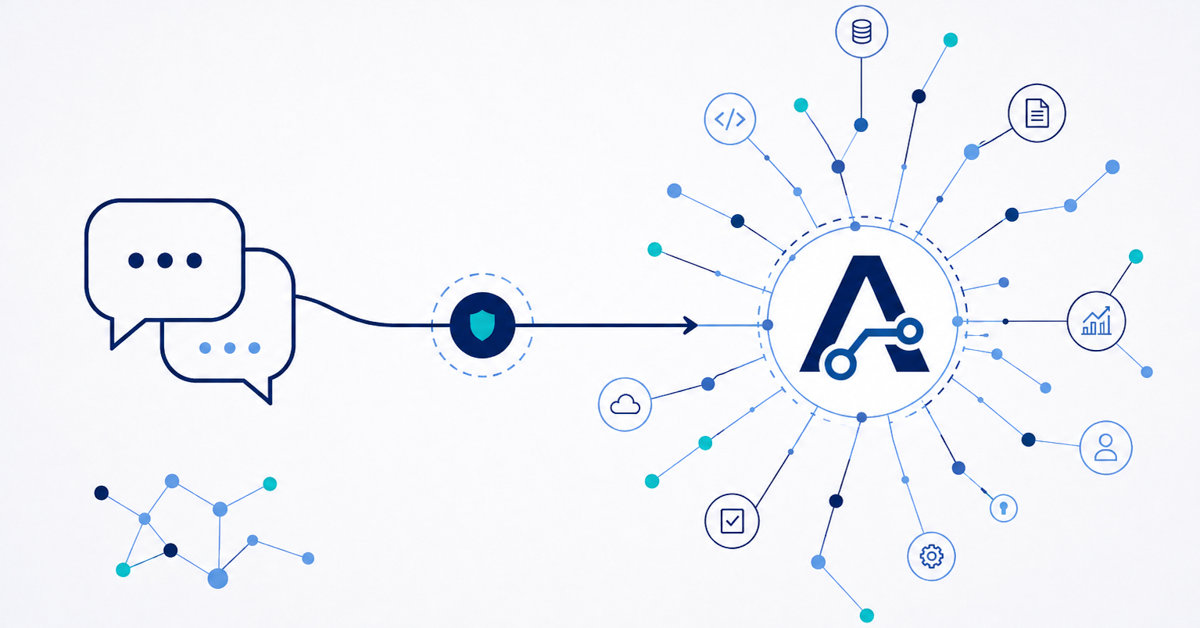
Most of what's making headlines about AI agents lately is the failure mode: one escaping a boundary it was supposed to stay inside of, or acting without anyone's authorization. But it's also not the only way multiple agents end up behaving. Here's a smaller, quieter story from one real morning: someone on our team made a two-day commitment in an email thread, then genuinely forgot about it.
Two agents end up in this story, and neither was built to know about the other. One agent's only job is scanning email every morning for genuine support issues, things broken, blocked, or billing. The other is one of our Builder Agents who works on completely unrelated infrastructure tasks, nowhere near deal or client work. Neither one was given any instruction about this particular commitment.
That kind of collaboration is possible because of the Thinktank, Agent Anything's shared organizational memory. A person's own conversations with their Personal Assistant stay private by default, and only move into the Thinktank when that person chooses to share them. A scheduled agent works differently: since it operates on its own, outside that personal boundary, it can be given standing permission to write to the Thinktank directly, set once when it's configured rather than approved conversation by conversation.
In this case, the agent scanning for support issues found an older, related note already in the Thinktank, recognized the new email replaced it, and wrote what it had figured out back into that same shared memory, even though acting on the thread itself wasn't its job. Later, the Builder Agent doing unrelated infrastructure work ran an ordinary search of that same memory for a completely different reason, and the note came back anyway, carrying who had written it and why. When it handed that back to the person who'd made the original promise, it could say exactly that: not "I knew this," but "your own notes already did." The person hadn't misplaced a detail. They had genuinely forgotten making the commitment at all, until a system they weren't even talking to put it back in front of them.
None of this happened because an agent decided, on its own, to go looking for something outside its job. Each one stayed inside a clearly defined role: the agent scanning email respected that a client thread wasn't its concern even while it kept the note, and the Builder Agent only found what it found because it asked a normal question inside a memory space it was already allowed to see. What connects them isn't agents freelancing. It's purposeful, governable context sharing between agents, and that's exactly what makes it safe to let an agent use its own judgment in the first place.